

Richard is the independent publisher of Economics Savvy and has owned and used PowerX Optimizer since 2020. He shares first-hand observations about its workflow, features, limitations, and trading risk.
Key Takeaways
- PowerX Optimizer is designed around a specific, rules-based strategy — it works best for traders willing to follow a defined system.
- Account size, available time, and experience level all affect whether the software fits your situation.
- The software focuses on stocks and options; traders looking for forex or futures tools will need to look elsewhere.
- Cost is a real factor — verify current pricing before deciding, and weigh it against your realistic trading budget.
- No software eliminates trading risk; PowerX Optimizer is a workflow and scanning tool, not a guarantee of results.
- A mismatch between your trading style and the software’s methodology is a common, avoidable mistake.
- Several related resources on this site can help you dig deeper into specific features and comparisons before deciding.
Question 1: Do You Understand What PowerX Optimizer Actually Does?
Before evaluating fit, you need a clear picture of what the software is. PowerX Optimizer is a stock and options scanning tool built around a specific trading methodology developed by Rockwell Trading. It scans a universe of stocks, ranks them using a proprietary scoring system, and surfaces candidates that meet defined entry criteria — including signals for both stock trades and options trades (calls and puts).
It is not a brokerage, not an automated trading bot, and not a general-purpose charting platform. If you’re expecting a tool that executes trades on your behalf or covers every asset class, that’s a fundamental mismatch. For a grounded explanation of what the software actually does under the hood, see PowerX Optimizer Explained: What the Software Actually Does.
Question 2: Is Your Trading Account Sized Appropriately for This Strategy?
This is one of the most practical questions to ask first, and one that many software reviews skip entirely. The PowerX Optimizer methodology involves trading individual stocks and options. Options contracts require enough capital to manage positions without over-concentrating risk on a single trade.
There is no universal minimum that applies to every trader’s situation, but the general principle holds: if your account is very small, the per-trade position sizing that the strategy implies may not be workable without taking on disproportionate risk. Traders with very limited capital may find the strategy mathematically difficult to execute with proper risk management. This doesn’t disqualify smaller accounts outright, but it’s a conversation worth having with yourself honestly before purchasing.
Question 3: How Much Time Can You Realistically Commit Each Week?
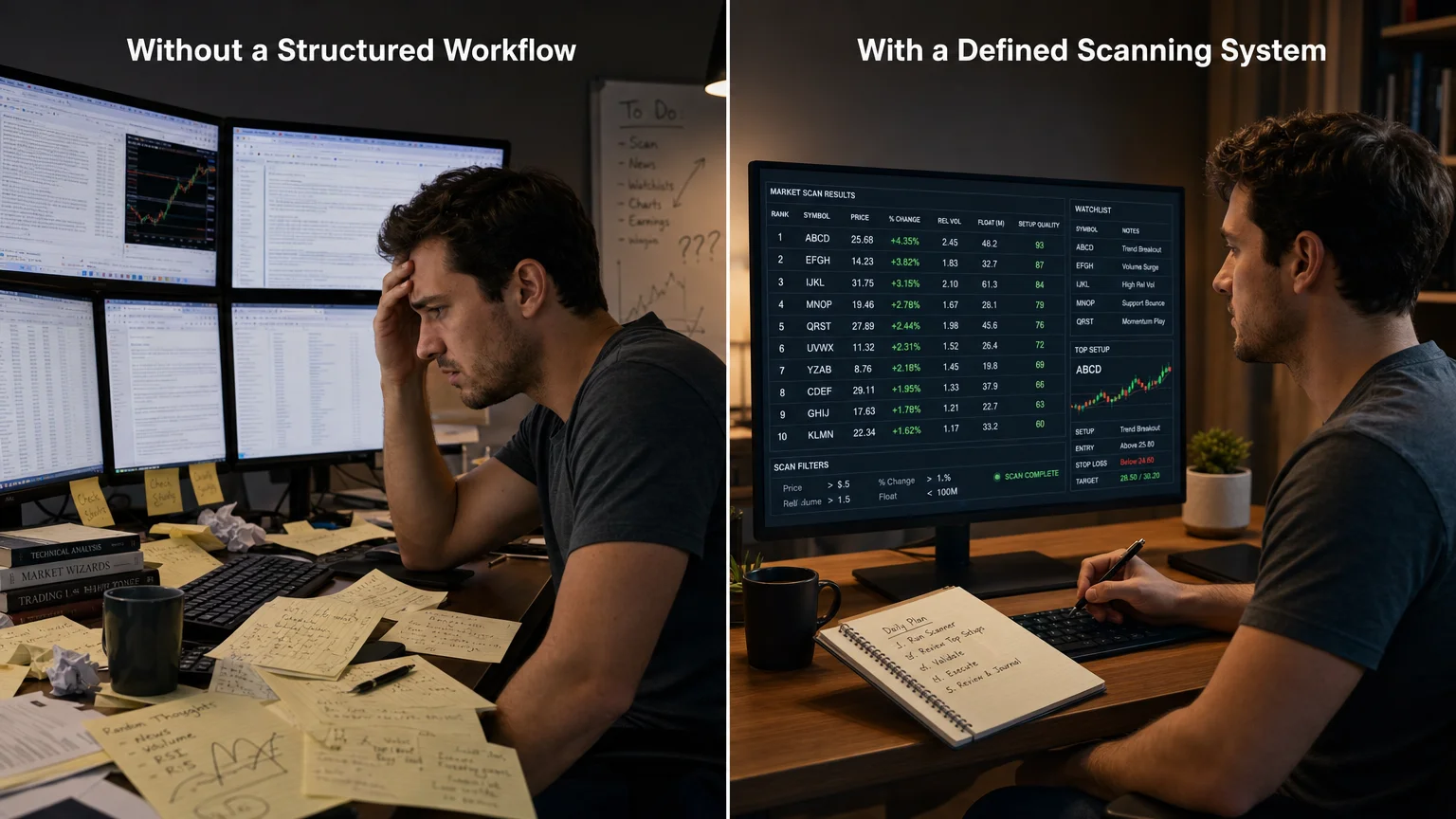
PowerX Optimizer is often described as a tool for traders who cannot watch screens all day — and that framing is largely accurate. The scanning workflow is designed to be completed in a relatively short daily session, typically before or after market hours, rather than requiring constant intraday monitoring.
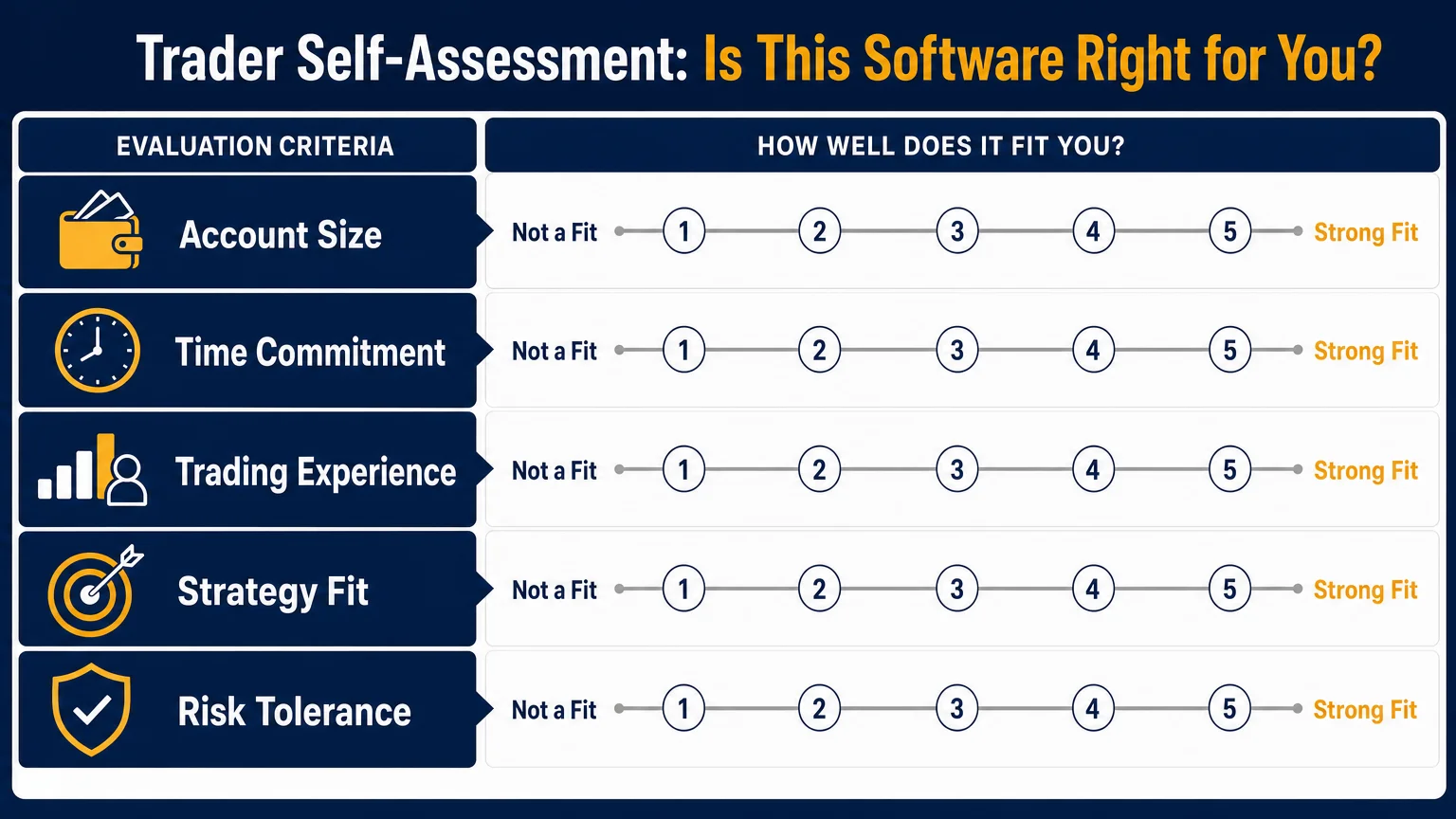
That said, “low time commitment” is relative. You still need to review scan results, evaluate candidates, place orders, and manage open positions. If your schedule allows only occasional weekend check-ins, the strategy’s active management requirements may be more demanding than expected. Traders who have tested this in real market conditions — including during volatile periods — have noted that workflow demands can shift. The article Trading Software in a Volatile Market: Does Workflow Change? explores this dynamic in more detail.
Question 4: What Is Your Current Experience Level with Stocks and Options?
PowerX Optimizer is not explicitly marketed as a beginner-only tool, but it does provide structure that can help newer traders avoid some common decision-making errors. The rules-based approach removes much of the ambiguity that trips up people early in their trading careers.
However, options trading carries its own complexity — Greeks, expiration dates, bid-ask spreads, and assignment risk are concepts that matter regardless of what software you use. If you’re entirely new to options, the software won’t teach you those fundamentals from scratch. Pairing it with foundational education is worth considering. For guidance on what to look for when evaluating options tools as a newer trader, Options Trading Software for Beginners: What to Look for is a useful starting point.
Question 5: Are You Comfortable Following a Rules-Based System?
This question separates a large portion of traders who will thrive with PowerX Optimizer from those who will struggle with it. The software is built around a specific methodology with defined entry signals, exit rules, and position management guidelines. It is not designed for discretionary traders who prefer to override signals based on intuition or macro views.
If you find yourself frequently second-guessing systematic signals or wanting to “customize” every trade based on your own read of the market, a rules-based scanner may feel constraining rather than helpful. Conversely, if you’ve been searching for a structured framework to replace ad-hoc decision-making, the methodology’s consistency is likely to feel like a genuine asset.
Question 6: Have You Honestly Assessed Your Risk Tolerance?
Trading stocks and options involves substantial risk of loss. That statement isn’t boilerplate — it’s the central fact that should frame every software purchase decision. PowerX Optimizer includes built-in risk parameters and stop-loss guidance as part of its methodology, which is a meaningful feature. But no software can eliminate the possibility of losses, and some trades will lose money regardless of how well the tool functions.
Before purchasing, ask yourself: Can you absorb a string of losing trades without abandoning the strategy prematurely? Are you trading with money you can genuinely afford to put at risk? For a thorough, non-alarmist breakdown of what trading risk actually means for new and intermediate traders, Stock and Options Trading Risk: What New Traders Must Know covers the core concepts clearly.
Question 7: How Does the Cost Compare to Your Trading Budget?
Software costs are a real part of the trading equation, and PowerX Optimizer is not a free tool. The pricing structure has varied over time, and verifying current figures directly is important — published prices can change. For a verified breakdown of what the software costs and what is included at different access levels, How Much Does PowerX Optimizer Cost? A Verified Breakdown is the most reliable reference on this site.
The practical question is whether the cost is proportionate to your account size and realistic trading activity. A software subscription that represents a large percentage of a small trading account creates a headwind that’s worth calculating before committing.
Question 8: Have You Compared It to Alternatives?
Evaluating PowerX Optimizer in isolation — without understanding what else exists in the market — is a common shortcut that can lead to buyer’s remorse in either direction. Some traders will find it’s exactly what they needed; others will discover that a more general-purpose platform fits their workflow better.
A direct comparison with one of the most widely used platforms in retail trading is available here: PowerX Optimizer vs. Thinkorswim: A Side-by-Side Look. The comparison covers functional differences, workflow implications, and the types of traders each platform tends to suit — without declaring a universal winner.
Question 9: Are You Looking for Education Alongside the Tool?
Some traders want software only; others want a broader framework that includes strategy education, mindset guidance, and financial planning context. PowerX Optimizer is part of an ecosystem offered by Rockwell Trading that includes educational components, and the Financial Fortress audiobook addresses the broader financial context that trading fits into.
If you’re in the camp that wants more than just a scanner — if you want to understand why the strategy works the way it does — the educational layer matters. Financial Fortress Audiobook: What It Covers and Who It’s For provides a breakdown of that resource for readers weighing the full picture.
Question 10: What Does a Month of Real Use Actually Look Like?
Marketing materials describe software at its best. What you actually want to know is what daily use looks like after the novelty wears off — the friction points, the workflow adjustments, the moments where the tool delivers and the moments where it falls short.
Honest, firsthand observations from a month of daily use with PowerX Optimizer — covering workflow, signal quality, and practical limitations — are documented in One Month Using PowerX Optimizer Daily: Honest Observations. Reading that before purchasing gives you a ground-level view that no product page will provide.
Suitability Summary: A Quick Self-Assessment Checklist
| Question | Strong Fit | Potential Mismatch |
|---|---|---|
| Strategy type | Rules-based, systematic | Fully discretionary |
| Asset focus | Stocks and options | Forex, futures, crypto |
| Time availability | Daily session, pre/post market | Occasional weekend only |
| Experience | Intermediate or structured beginner | Complete novice with no options knowledge |
| Account size | Sufficient for proper position sizing | Very small with no room for diversification |
| Risk tolerance | Accepts defined losses as part of strategy | Cannot tolerate any losing trades |
| Goal | Structured workflow, reduced decision fatigue | Fully automated, hands-off execution |
Frequently Asked Questions
What kind of trader is PowerX Optimizer designed for?
PowerX Optimizer is designed for traders who want a rules-based, systematic approach to scanning stocks and generating options trade candidates. It suits people who can commit to a daily review process and are comfortable following defined entry and exit signals rather than trading on discretion.
Does PowerX Optimizer work for complete beginners?
The software provides structure that can help newer traders avoid some common errors, but it does not teach options fundamentals from scratch. Beginners with no prior options knowledge will likely need supplementary education to use the tool effectively and manage risk appropriately.
Is PowerX Optimizer an automated trading bot?
No. PowerX Optimizer is a scanning and signal tool — it identifies trade candidates and provides entry/exit guidance, but it does not execute trades automatically. You remain responsible for placing and managing every trade.
What assets does PowerX Optimizer cover?
The software focuses on U.S. stocks and options. It is not designed for forex, futures, or cryptocurrency trading. Traders whose primary interest is in those asset classes should look for tools built specifically for those markets.
How do I verify the current price of PowerX Optimizer?
Pricing can change over time, so the most reliable approach is to check the current verified breakdown on this site at How Much Does PowerX Optimizer Cost? A Verified Breakdown, and then confirm directly with Rockwell Trading before purchasing.
Can PowerX Optimizer guarantee trading profits?
No software can guarantee trading profits. PowerX Optimizer is a workflow and scanning tool that applies a defined methodology. Trading stocks and options involves substantial risk of loss, and results will vary based on market conditions, position sizing, and individual execution.
How does PowerX Optimizer compare to free charting platforms?
The core difference is focus: PowerX Optimizer is built around one specific methodology and surfaces ranked candidates based on that system, while general-purpose platforms like Thinkorswim offer broader charting and analysis tools without a built-in strategy framework. Which is better depends entirely on whether you want a pre-built system or prefer to build your own. See the PowerX Optimizer vs. Thinkorswim: A Side-by-Side Look comparison for a detailed breakdown.
Conclusion
Asking whether PowerX Optimizer is right for you is a more useful question than asking whether it “works.” The software is a focused tool built around a specific methodology — and like any focused tool, it performs best in the hands of someone whose situation, goals, and habits align with what it’s designed to do. Working through these 10 questions honestly before purchasing is the most practical step you can take.
If you’re still building your picture of the software, the One Month Using PowerX Optimizer Daily: Honest Observations post offers a ground-level view of what regular use actually involves — a useful next read before making a decision.
Disclosure: Economics Savvy is an independent affiliate website and may earn a commission on purchases made through links on this page, at no additional cost to you. Economics Savvy is not a registered investment adviser and does not provide personalized investment advice. Trading stocks and options involves substantial risk of loss and may not be suitable for all investors.
Frequently Asked Questions
What kind of trader is PowerX Optimizer designed for?
PowerX Optimizer is designed for traders who want a rules-based, systematic approach to scanning stocks and generating options trade candidates. It suits people who can commit to a daily review process and are comfortable following defined entry and exit signals rather than trading on discretion.
Does PowerX Optimizer work for complete beginners?
The software provides structure that can help newer traders avoid some common errors, but it does not teach options fundamentals from scratch. Beginners with no prior options knowledge will likely need supplementary education to use the tool effectively and manage risk appropriately.
Is PowerX Optimizer an automated trading bot?
No. PowerX Optimizer is a scanning and signal tool — it identifies trade candidates and provides entry/exit guidance, but it does not execute trades automatically. You remain responsible for placing and managing every trade.
What assets does PowerX Optimizer cover?
The software focuses on U.S. stocks and options. It is not designed for forex, futures, or cryptocurrency trading. Traders whose primary interest is in those asset classes should look for tools built specifically for those markets.
How do I verify the current price of PowerX Optimizer?
Pricing can change over time, so the most reliable approach is to check the current verified breakdown on this site at [How Much Does PowerX Optimizer Cost? A Verified Breakdown](/blog/how-much-does-powerx-optimizer-cost-a-verified-breakdown/), and then confirm directly with Rockwell Trading before purchasing.
Can PowerX Optimizer guarantee trading profits?
No software can guarantee trading profits. PowerX Optimizer is a workflow and scanning tool that applies a defined methodology. Trading stocks and options involves substantial risk of loss, and results will vary based on market conditions, position sizing, and individual execution.
How does PowerX Optimizer compare to free charting platforms?
The core difference is focus: PowerX Optimizer is built around one specific methodology and surfaces ranked candidates based on that system, while general-purpose platforms like Thinkorswim offer broader charting and analysis tools without a built-in strategy framework. Which is better depends entirely on whether you want a pre-built system or prefer to build your own. See the [PowerX Optimizer vs. Thinkorswim: A Side-by-Side Look](/blog/powerx-optimizer-vs-thinkorswim-a-side-by-side-look/) comparison for a detailed breakdown.
Richard is the independent publisher of Economics Savvy and has owned and used PowerX Optimizer since 2020. He shares first-hand observations about its workflow, features, limitations, and trading risk.